 Mims
Mims Apostille Notaries: Who They Are and What They Do
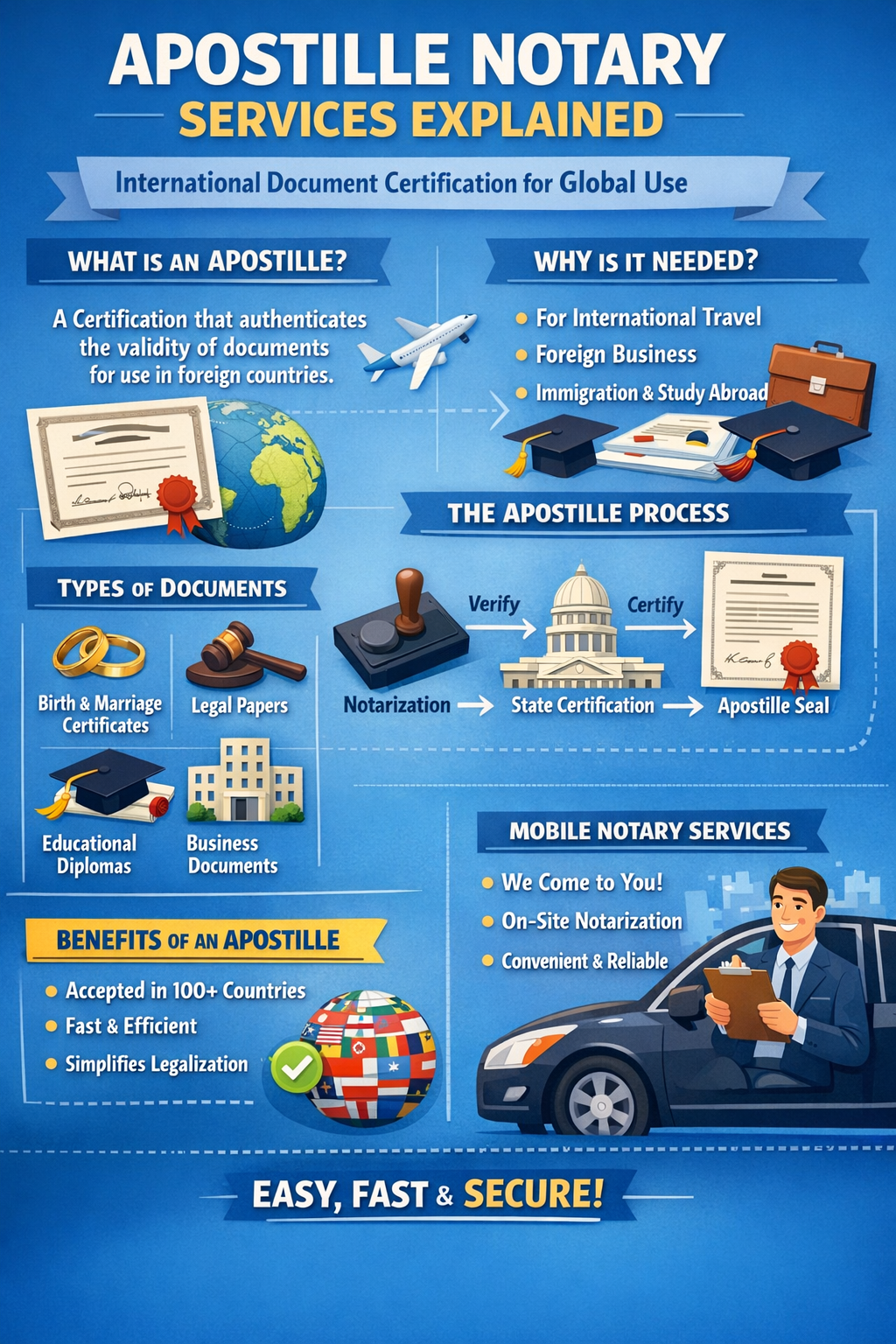
An Apostille Notary is a notary public who specializes in handling documents that need international authentication for use in foreign countries that are part of the Hague Apostille Convention. This process ensures that a document issued in one country is recognized as valid in another country without additional legalization.
1. Key Roles of Apostille Notaries
- Notarization of Documents: They authenticate signatures on documents such as affidavits, powers of attorney, or contracts.
- Apostille Certification: They coordinate with the proper authorities (usually the Secretary of State in the U.S.) to obtain an apostille certificate, which certifies the authenticity of the notarization.
- Document Verification: They ensure the documents meet the legal requirements of the foreign country where they will be used.
2. Common Services Offered
Apostille for Personal Documents:
- Birth certificates
- Marriage certificates
- Death certificates
- Divorce decrees
Apostille for Business Documents:
- Articles of incorporation
- Contracts and agreements
- Powers of attorney
- Certificates of good standing
Notarization Services:
- Administering oaths
- Witnessing signatures
- Certifying copies of documents
Authentication and Legalization Guidance:
- Determining if a document requires an apostille or consular legalization
- Advising on foreign country requirements
3. Benefits of Using an Apostille Notary
- International Recognition: Ensures your documents are legally recognized abroad.
- Time-Saving: Handles the complex process of notarization and certification efficiently.
- Accuracy: Reduces the risk of rejected documents due to errors in notarization or apostille certification.
4. How It Works
- You provide the original document.
- The notary notarizes the document (verifies signature and authenticity).
- The document is submitted to the state authority for an apostille.
- Once issued, the apostilled document is valid in all countries that recognize the Hague Convention.
Downloads
Download and complete the form before your appointment when possible.
5. Authenticate Documents for Non-Hague Countries
For countries that are not part of the Hague Convention, documents usually require authentication and consular legalization instead of an apostille.
- Review document requirements for the destination country
- Coordinate notarization and state/federal authentication steps
- Guide submission for embassy or consulate legalization